

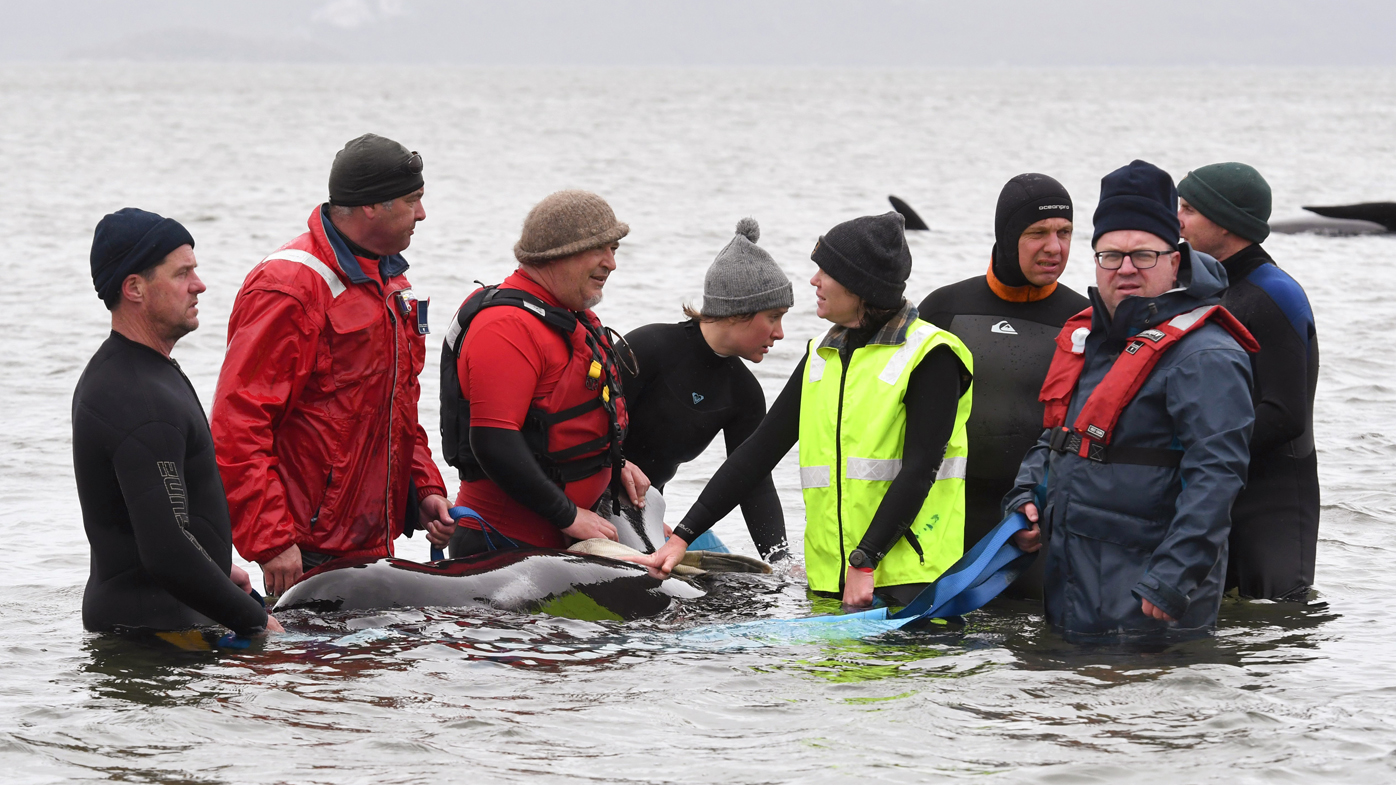
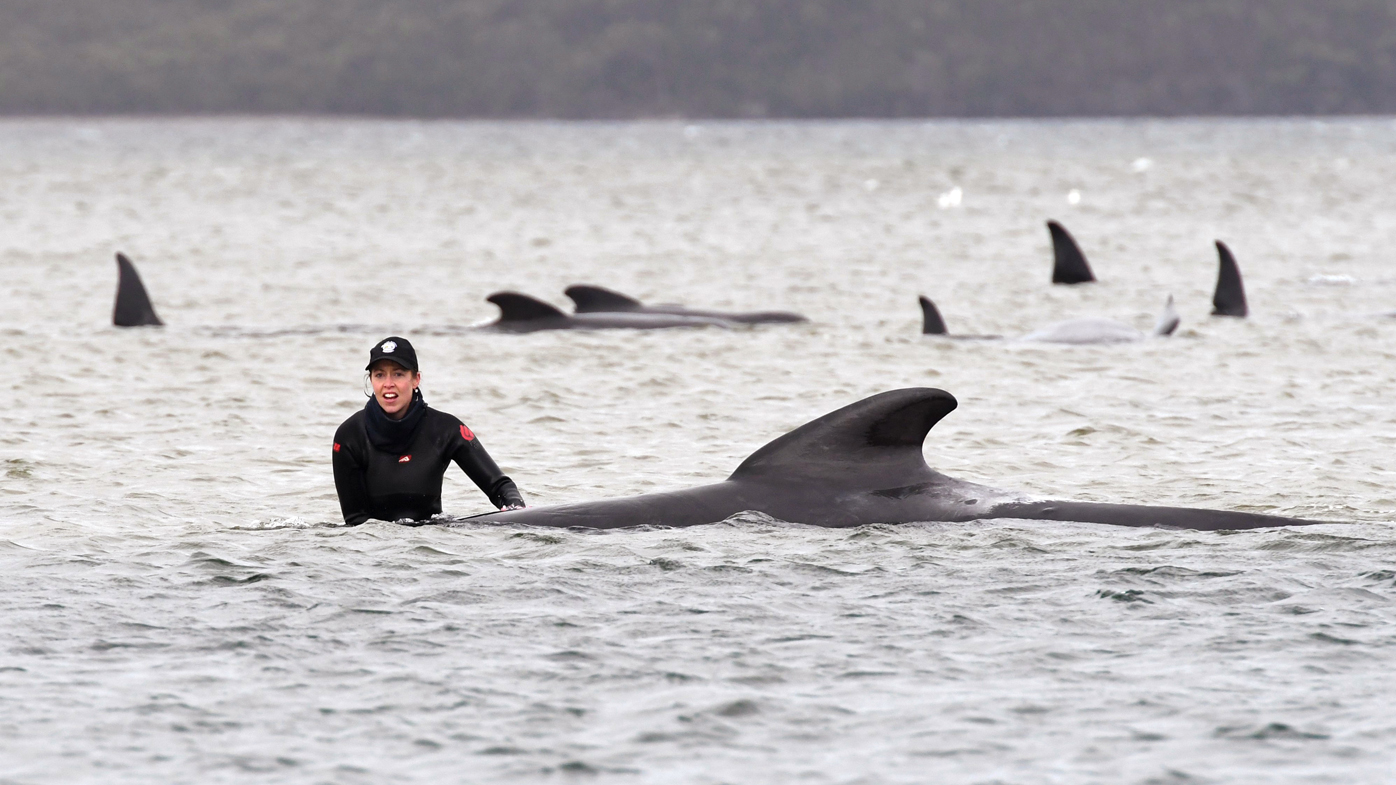
Rescuers working to save hundreds of whales stranded along the Tasmanian coastline have managed to return more than 70 of them back to the sea.
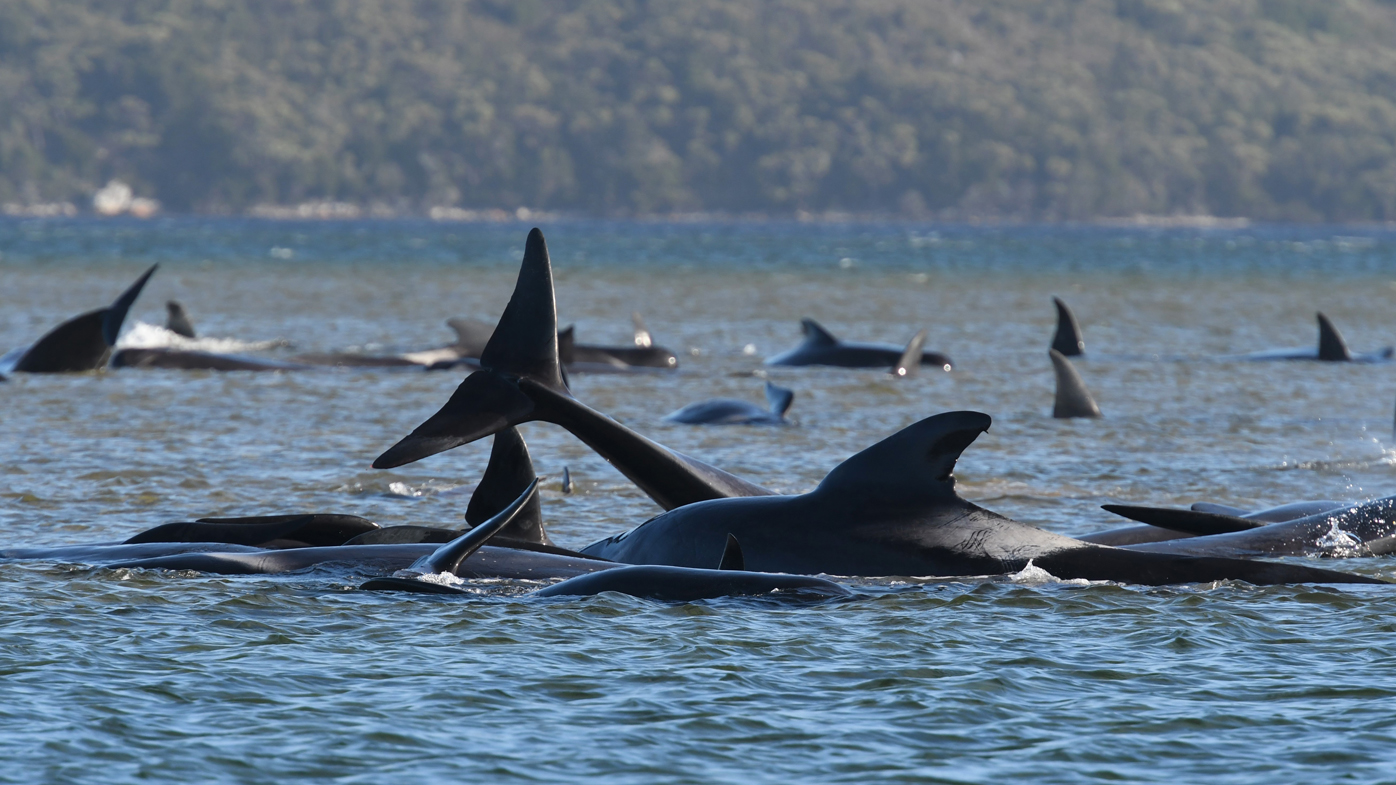
More than 250 long-finned pilot whales were discovered on Monday, stranded on sandbars along Macquarie Harbour, about 190 kilometres from Hobart.
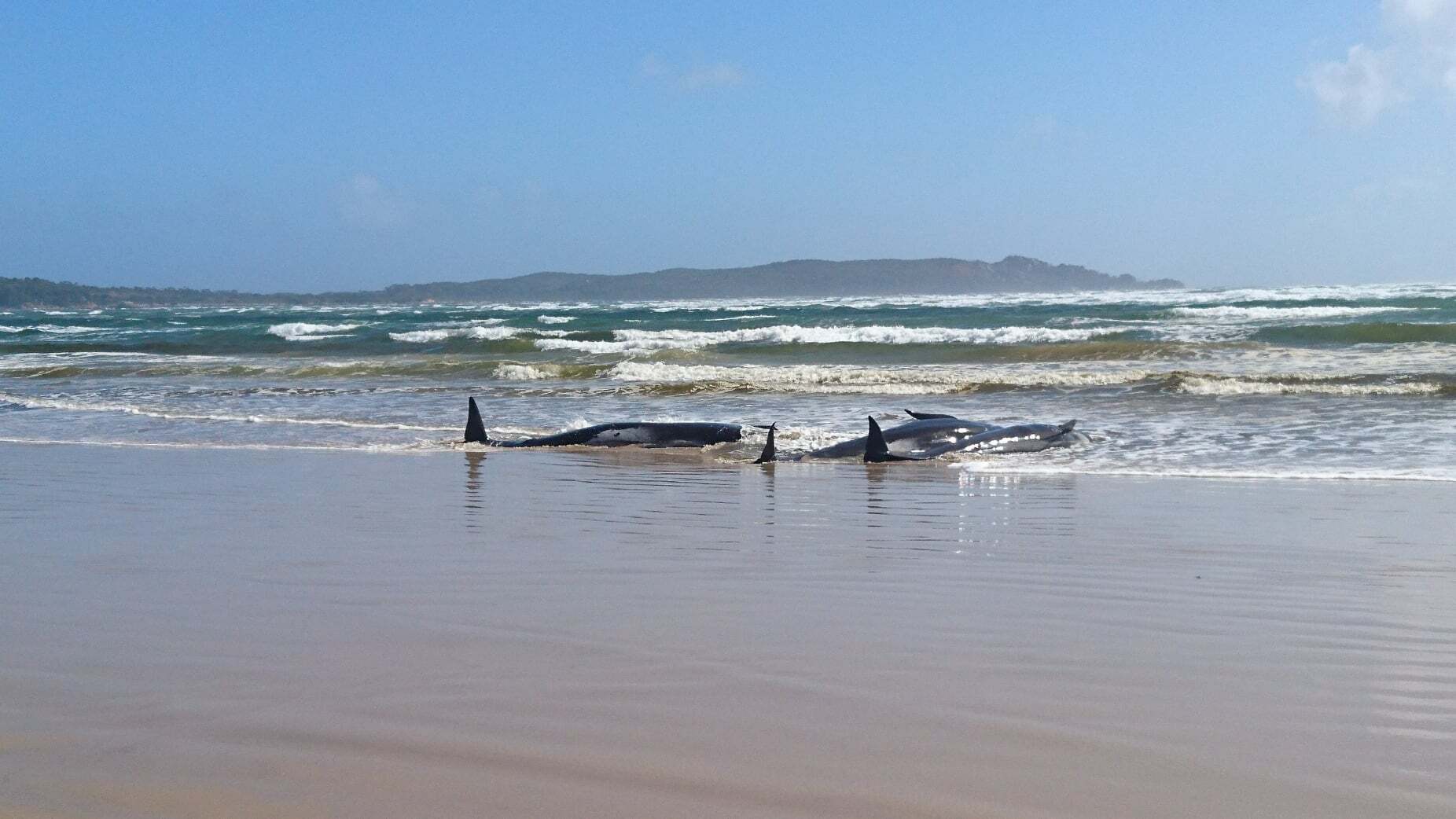
Sadly another 200 were found, most of them dead, a few kilometres away yesterday.
READ MORE: More than 450 whales now stranded in Tasmania after another 200 found
Tasmania Parks and Wildlife have been working tirelessly to free the stranded whales before more perish along the sand.
While about 20 of the whales sent back out to sea appear to be in decent health, at least four of them will likely need to be euthanised if their health doesn't improve.
"The plan remains the same - our focus is on those animals that are still alive and are still in condition to be rescued off the bar and out to deeper water," Parks and Wildlife's Nic Deka told nine.com.au.
READ MORE: Mega-pod of massive whales seen feeding off NSW coast
"The aerial recon we put up this morning to do the infrared survey found around another 200 in a couple of bays, probably seven to 10 kilometres away from the stranding we've been working with," Tasmania Parks and Wildlife Services regional manager Nic Deka said.
Mr Deka said yesterday the extra whales discovered may have been missed because of the odd location and murky waters making it difficult to see.
"It's not necessarily a place that would be obvious for a stranding and the other reason is the water there is very dark so potentially they stranded, were washed back into the water and then washed back into the bay, making them harder to detect," he said.
READ MORE: Humpback whales found in crocodile-infested Northern Territory river
He said crews will continue their extensive search, on top of the removal of the others already located, to see if any more are found.
At least 25 whales were confirmed to have died on Tuesday, however that number is expected to rise further as rescue teams continue their work.
Mr Deka said a major focus will be disposing of the dead whale carcasses as quickly as possible.
"Our preference is for disposal at sea, we're still taking expert advice as to exactly where the drop off point may be," Mr Deka told media.
READ MORE: Skipper captures extraordinary moment giant whale emerges alongside boat in WA
"Our focus for the next few days will be trying to contain the spread of carcasses because as the whales start to de-compose they will bloat and float, and with wind and tide they will drift."
A small number of rescued whales were found to have re-stranded on Tuesday however Mr Deka said the mission had been "more successful than not" and most of those rescued were still swimming in deep water.
"The mortality has increased, that's inevitable but there are still a significant number which are alive," Mr Deka told nine.com.au.
from 9News https://ift.tt/3cpTvBr
via IFTTT



0 Comments